Why The Curiosity Gap Isn’t New, and What That Has To Do With My Art School Experience
Here’s a kind of meandering stream of consciousness…
A while back I had a conversation with a good friend Jennifer Cario (author of Pinterest Marketing An Hour A Day, and President of Sugar Spun Marketing.)
We were talking about The Curiosity Gap, and how it works in art, marketing, and teaching.
And I made this connection.
The Curiosity Gap Explained
The Curiosity Gap, if you don’t know (and you should, and probably do because you’ve probably been motivated by it just today) is not a new thing.
This Wired article from 2010 gives a great primer on the psychology and history behind the phenomenon. It goes back to George Loewenstein’s work on what he called “The Information Gap” at Carnegie-Melon in the 1990’s.
Essentially, The Curiosity Gap happens when, as a reader or viewer, we sense “a gap between what we know and what we want to know”.
It’s a part of that hard-wired storytelling gene we seem to have as humans that’s become so critical to marketing in recent years, as we’ve moved from “selling stuff” to “generating curiosity and trust.”
Curiosity As Clickbait
We associate The Curiosity Gap with clickbait headlines now… and there even were unfounded rumors of its death. Clearly not the case, if you’ve looked at your Facebook feed lately.
This Atlantic article from 2014 talked about how UpWorthy had essentially perfected The Curiosity Gap as clickbait content marketing, and that maybe it had run its course.
“…descriptive headlines—ones that tell you exactly what the content is—are starting to win out over Upworthy’s signature “curiosity gap” headlines, which tease you by withholding details. (‘She Has a Horrifying Story to Tell. Except It Isn’t Actually True. Except It Actually Is True.’)”
Curiosity Still Works
So no, curiosity is not dead. Not at all.
It still works. It’s still legit. It’s a tool of the clickbait marketer, but it’s not merely a clickbait tactic.
The Part Where Closure Comes In
Anyhoo, I was talking with Jen, and I remarked that it all seemed very much related to what we called “closure” in art school.
Not “closure” like “I feel our issues are resolved” closure, but “closure” like leaving the audience with the responsibility to provide info on their own to complete the artistic experience.
We didn’t have “The Curiosity Gap” in our vocabulary then… and “closure” was a more specifically visual term. But it still traffics in that “information gap” concept that came out of Carnegie-Melon later. (Yes, I’m that old.)
A Visual Example Of Closure
At its simplest, in visual art, it has to do with leaving information out of an image…
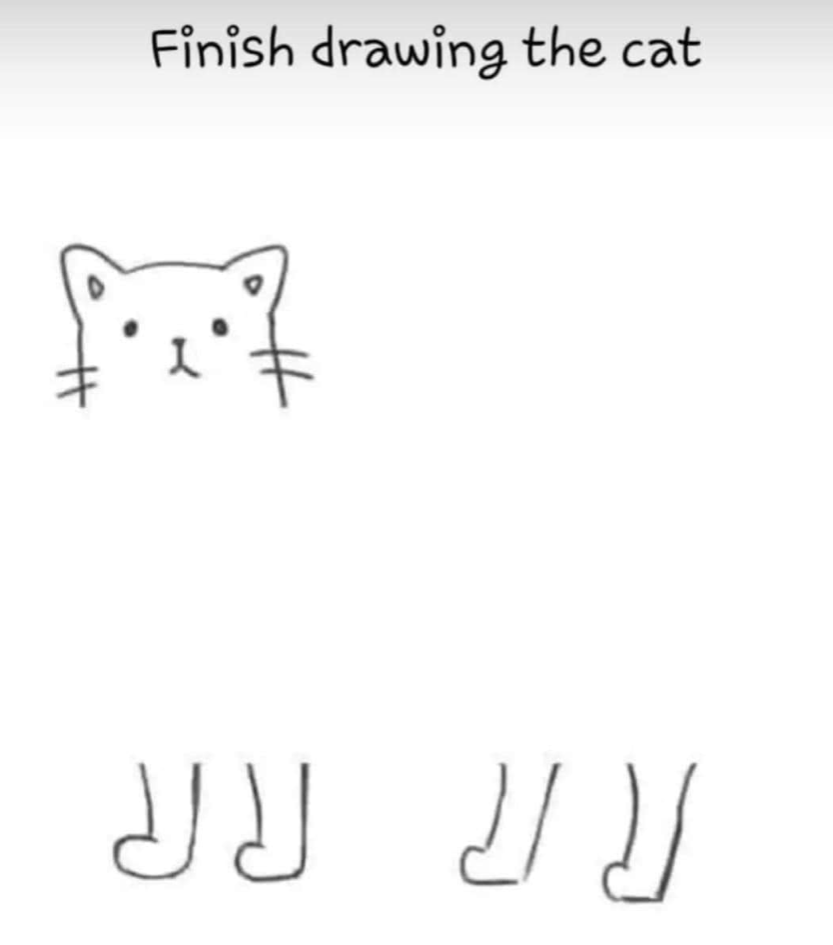
Closure operating: the viewer has to provide closure to complete the image… the subconscious wants completion. (Image: Ghibli Community Fan Page – Facebook – https://www.facebook.com/TheGhibliFamily)
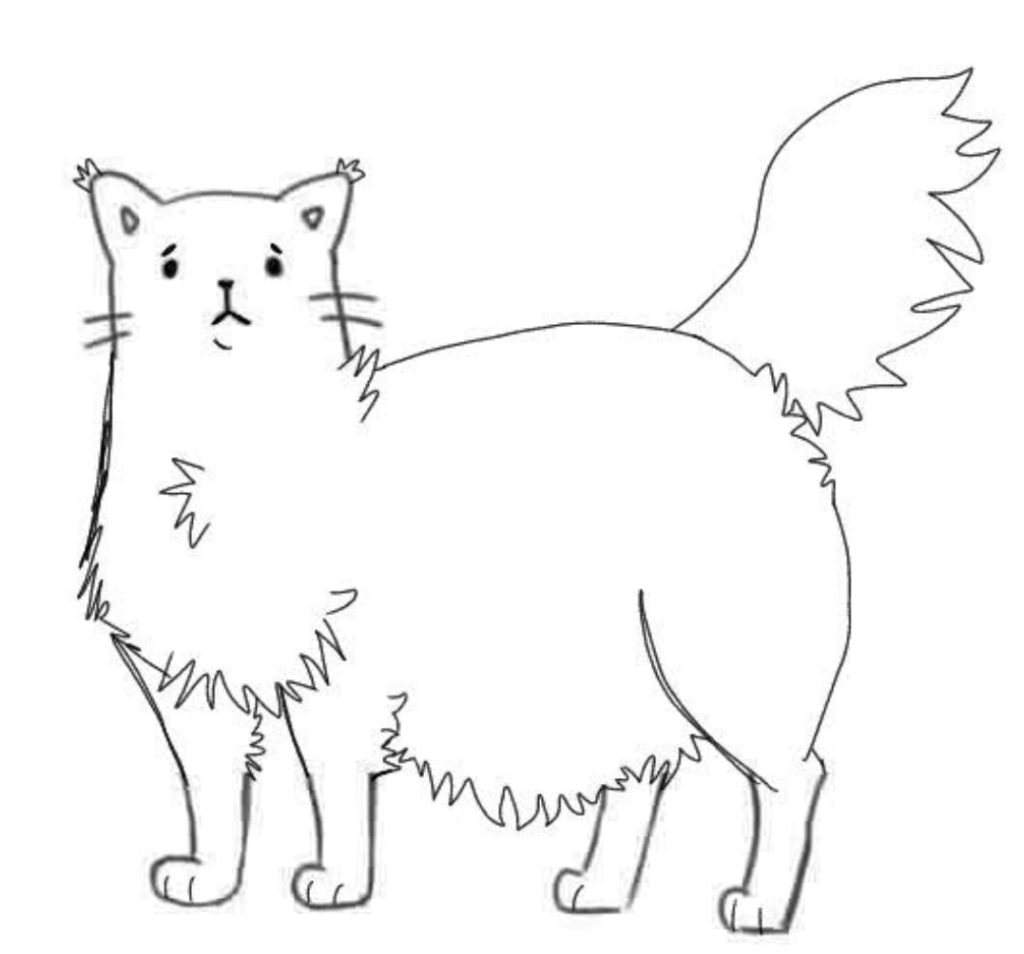
Closure not operating: the viewer gets all the info they need. (Image: Ghibli Community Fan Page – Facebook – https://www.facebook.com/TheGhibliFamily)
I’ll admit it’s kind of counter-intuitive, since you’d imagine that if a picture “had closure” it would appear complete.
Conceptual or Thematic Closure
On the more complex side, of course, is conceptual closure… is the “theme” or “message” of the art explicit and “on the nose” (as we’d say in literary dialog), or does it require interpretation? Does the viewer have to bring their own life experience to it to complete the emotional or communicative intent?
Remembering and leveraging the value of curiosity can hugely inform your presentation of theme… whether you’re explicit or implicit, whether you prescribe or describe, whether you gently guide the audience to your conclusions or hit them over the head.
Closing The Loop
All this, of course, loops back around to The Curiosity Gap and how it relates to the inherent human desire to fill the gap.
Visual art, literature, film, marketing, and even training all benefit from the fact that we are hard-wired to seek, or even impose, a story from any series of events. If a piece of content starts the story — presents Act One and Act Two — we’re unconsciously driven to “complete the pattern,” “close the loop,” or “finish the story” — to provide “closure” for ourselves by remaining engaged through the conclusion of Act Three.
In fact, one could argue that marketing, training, movies, and literature that don’t leave that opportunity for participation are less attractive to us psychically. Viewers and readers respond to mystery. They want gaps in information filled. That’s why cliffhangers work. And why screenplays place “buttons” on scenes.
Or you could argue that at least in certain cases, delivering on expected tropes without deviating from expectations gives the reader exactly the comfort experience that they’re looking for… which is still a “win.” 🤔
Anyhow, if you’re interested in storytelling for marketing, movies, books, or anything else, closure and The Curiosity Gap are worth understanding.
If you’d like to chat about your story, and learn if I can help you make progress, click the button. Click. The. Button.
 Chip Street - Writey Guy